
The challenge
Pease Doors sells highly configurable products, and their customers don’t always know:
- What size door they need
- Which style fits their home
- Whether they’re replacing or upgrading
Most ecommerce brands assume they do, so shoppers land on product pages and face:
- Too many products, with no clear place to start
- No way to filter by intent (replacing vs. upgrading vs. fixing)
- Friction in figuring out what to buy
The result? Hesitation, drop-off, and lower-value orders.
Pease’s problem wasn't the products. It was the experience. They expected shoppers to figure it out themselves, but lots of them didn't.
"We built product recommendation quizzes in ConvertFlow that dynamically recommend the right products from our Shopify store: helping customers find the right door product and size, which was something they seriously struggled with."
The solution
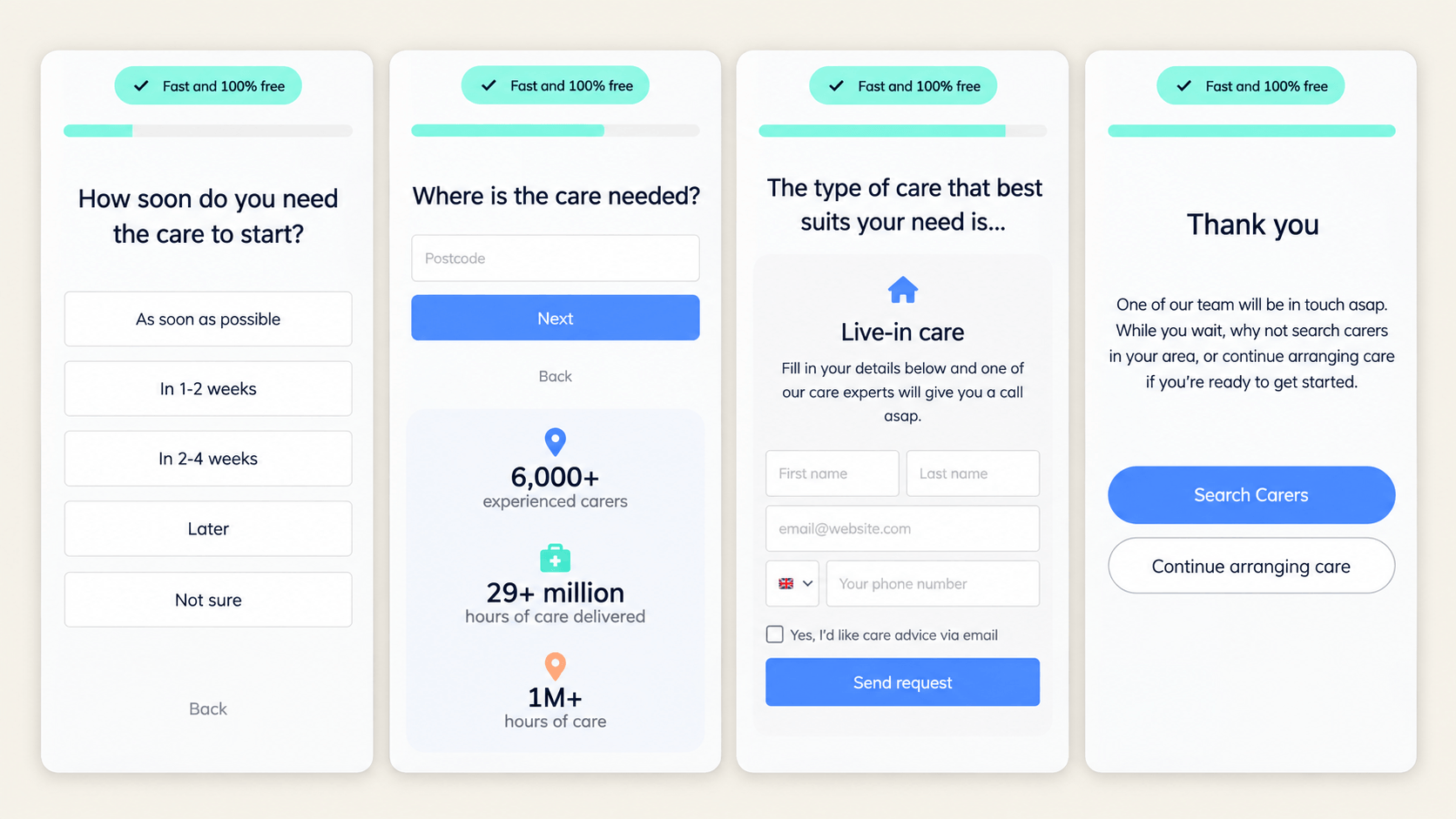
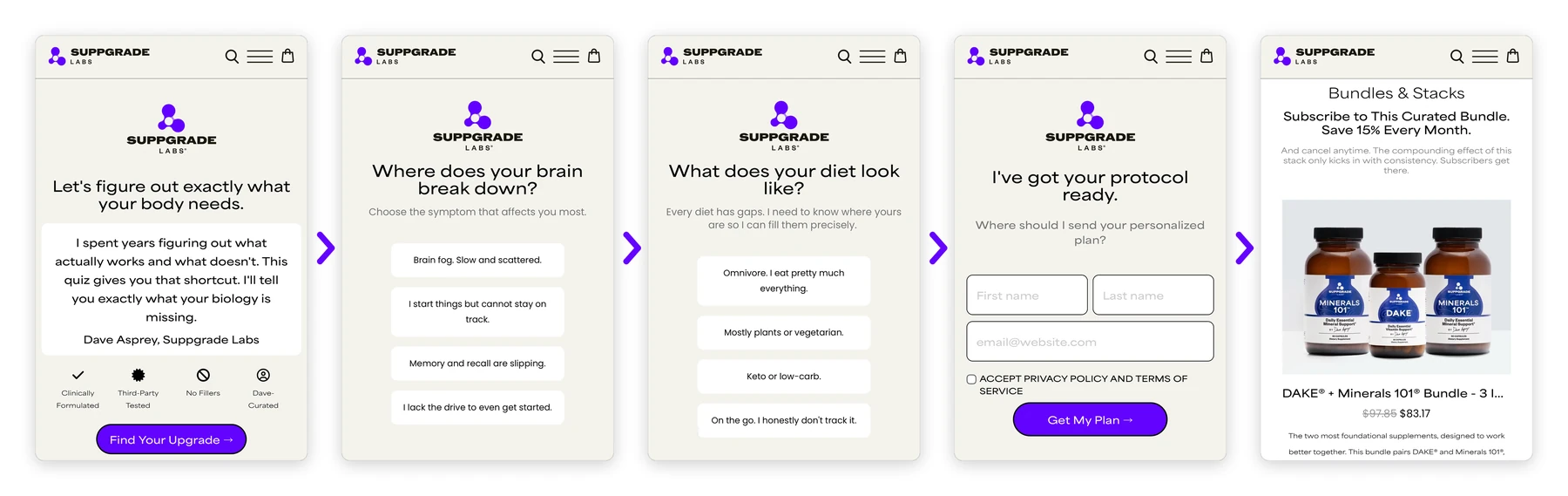
Pease Doors replaced store-first browsing with guided quiz funnels. Instead of asking shoppers to search, they guide them step by step to the right product.
1. Start with a guided quiz experience
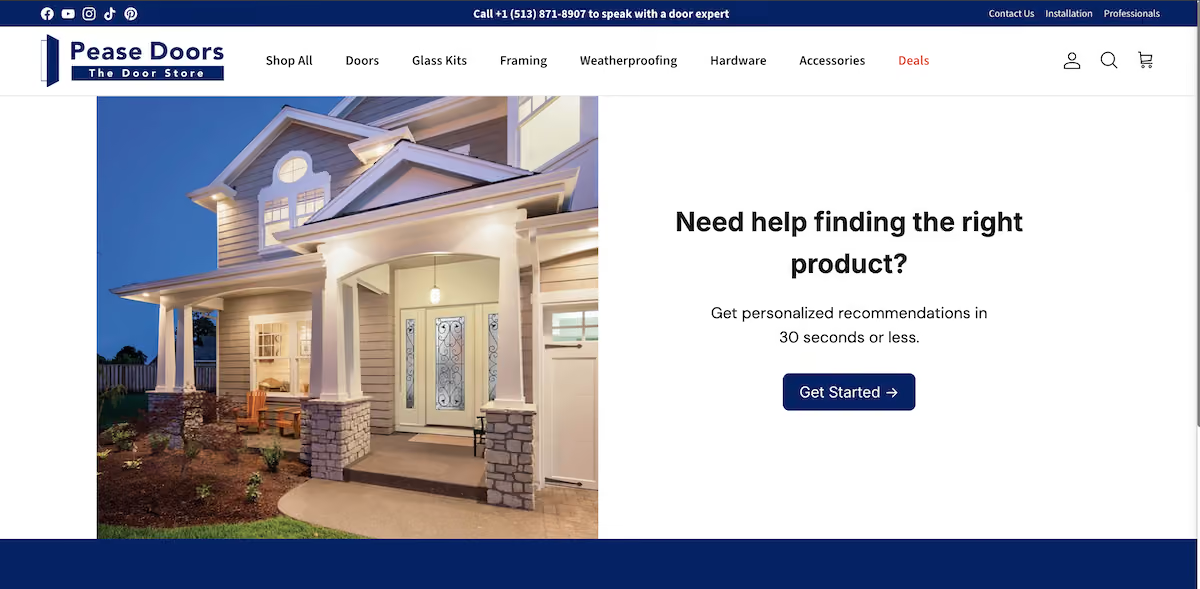
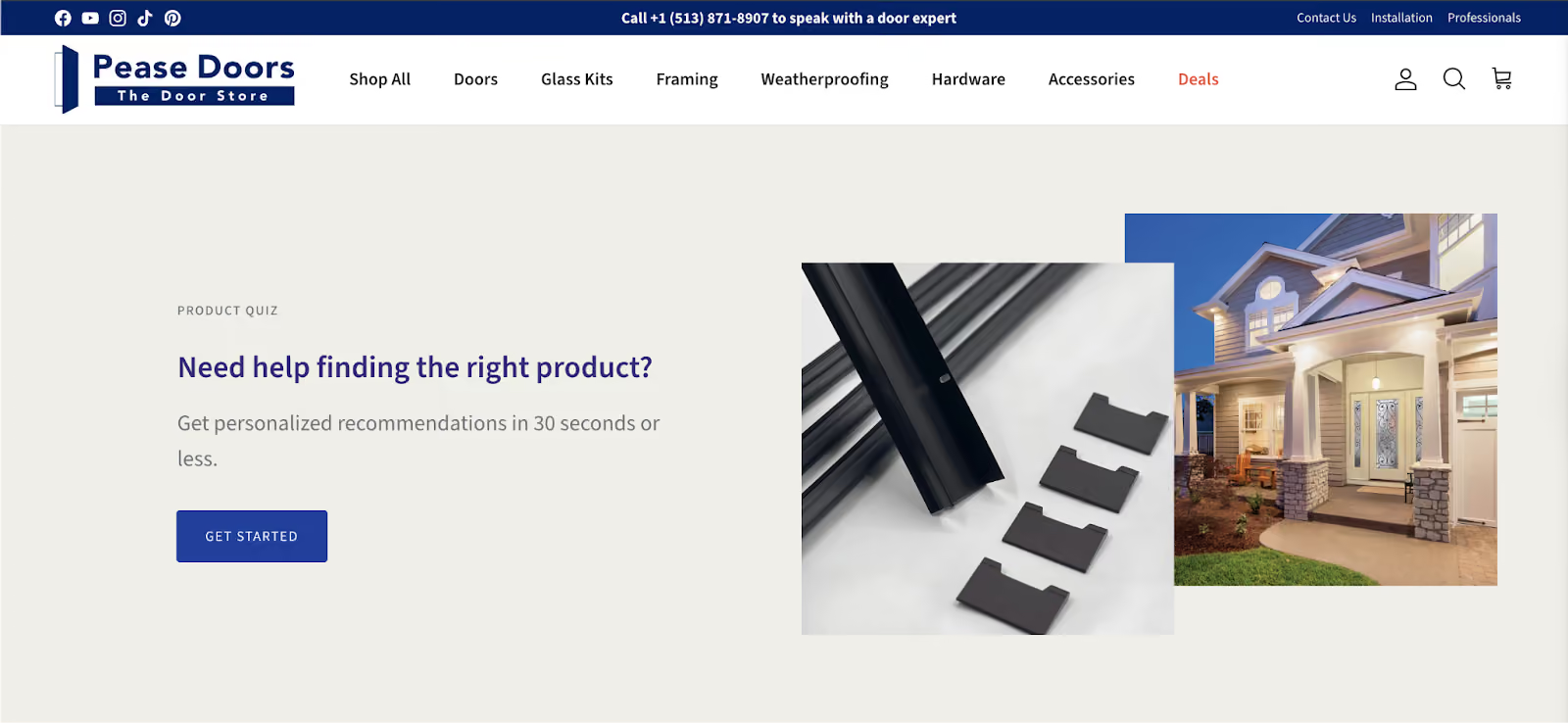
The entry point is simple: “Need help finding the right product?”
From there, the quiz:
- Asks a few targeted questions
- Narrows down options
- Moves users toward a clear recommendation
Instead of browsing dozens of products, shoppers follow a structured path.
2. Capture both browsing & high-intent traffic
The same quiz is deployed in two ways:
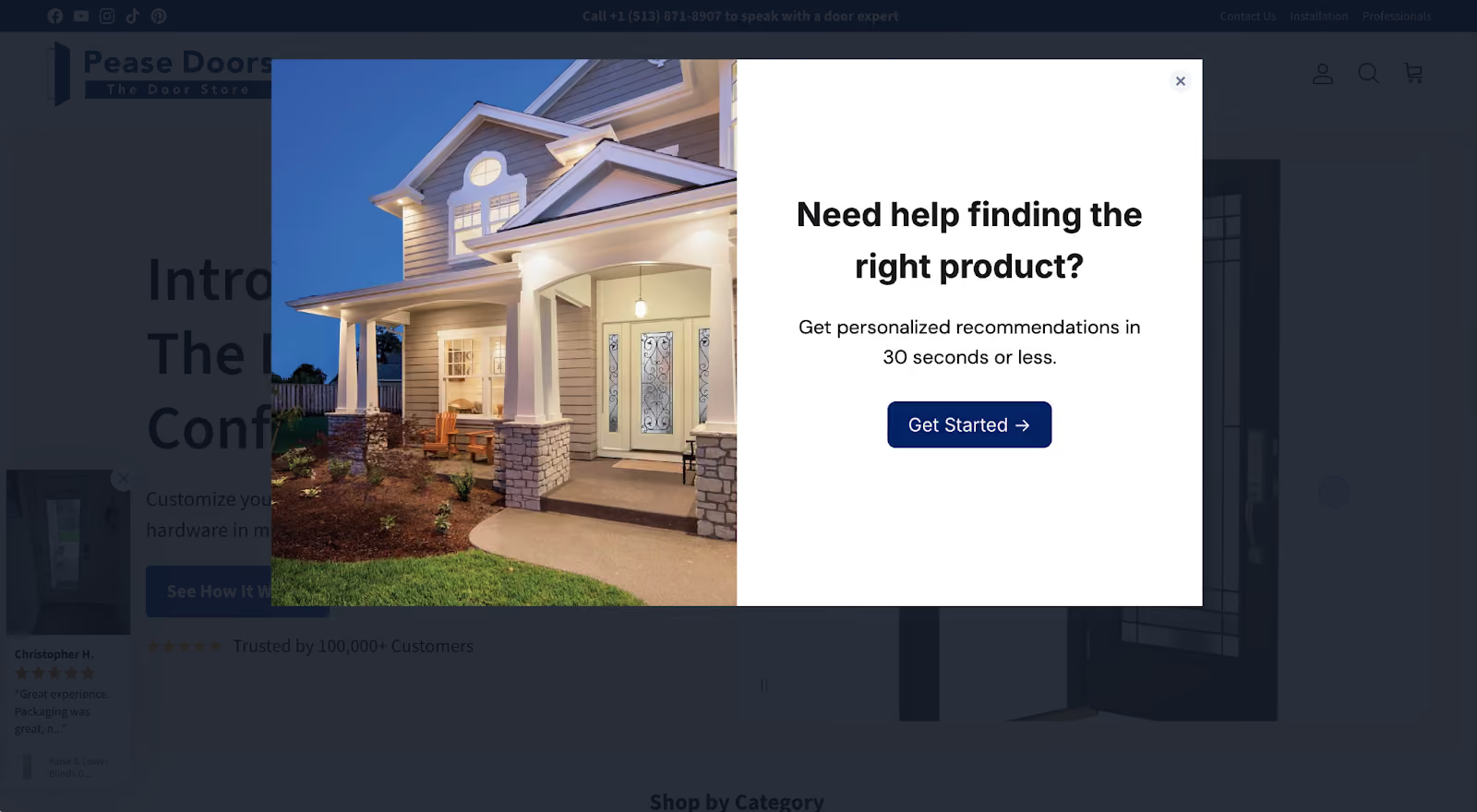
1. On-site quiz (popup/embed)
- Engages visitors already browsing
- Helps undecided shoppers take the next step
- Adds structure to open-ended navigation
2. Dedicated quiz landing page
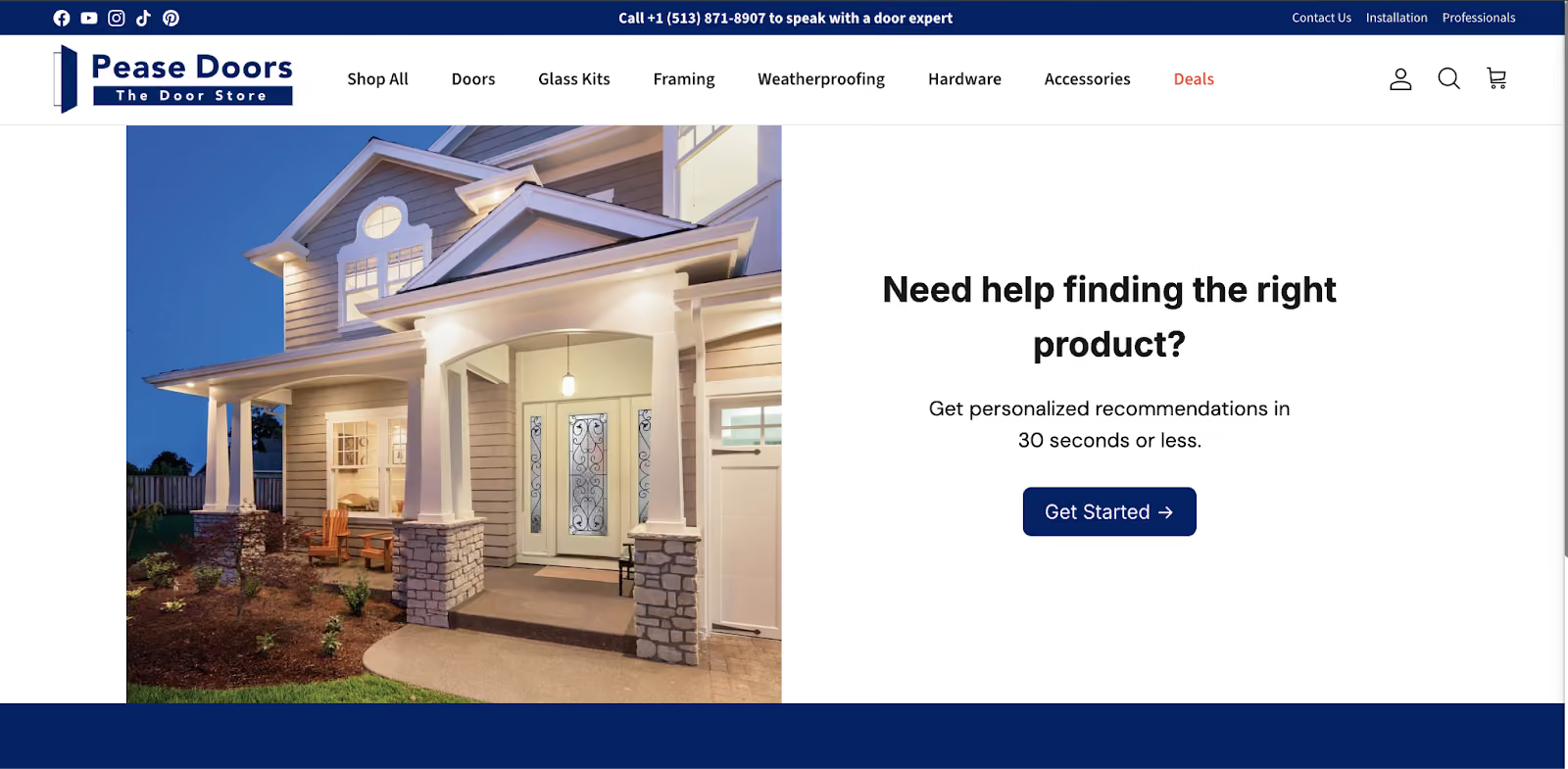
For more intentional traffic, Pease uses a focused landing page version of the quiz, which:
- Removes distractions
- Starts the decision process immediately
- Moves users from intent to recommendation faster
3. Guide decisions instead of forcing them
Inside the funnel, shoppers move through a sequence of decisions:
- What they’re looking to do
- What type of product they need
- Key preferences and constraints
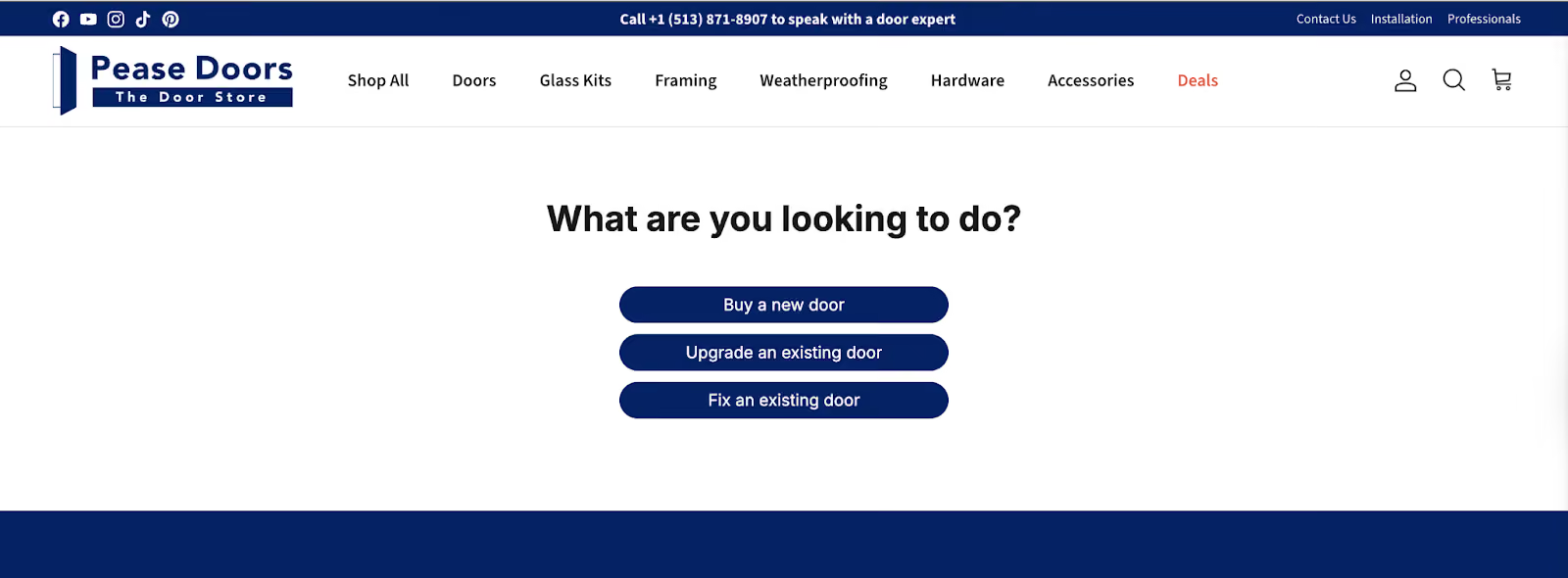
Each step reduces complexity. Instead of guessing between products, people arrive at a clear, relevant option.
4. Apply the same system across use cases
They don’t limit it to one quiz. Pease extends the same approach to:
- Sizing and fit guidance
- Product-specific configurations
The result is a repeatable system that helps customers make better decisions across the site.
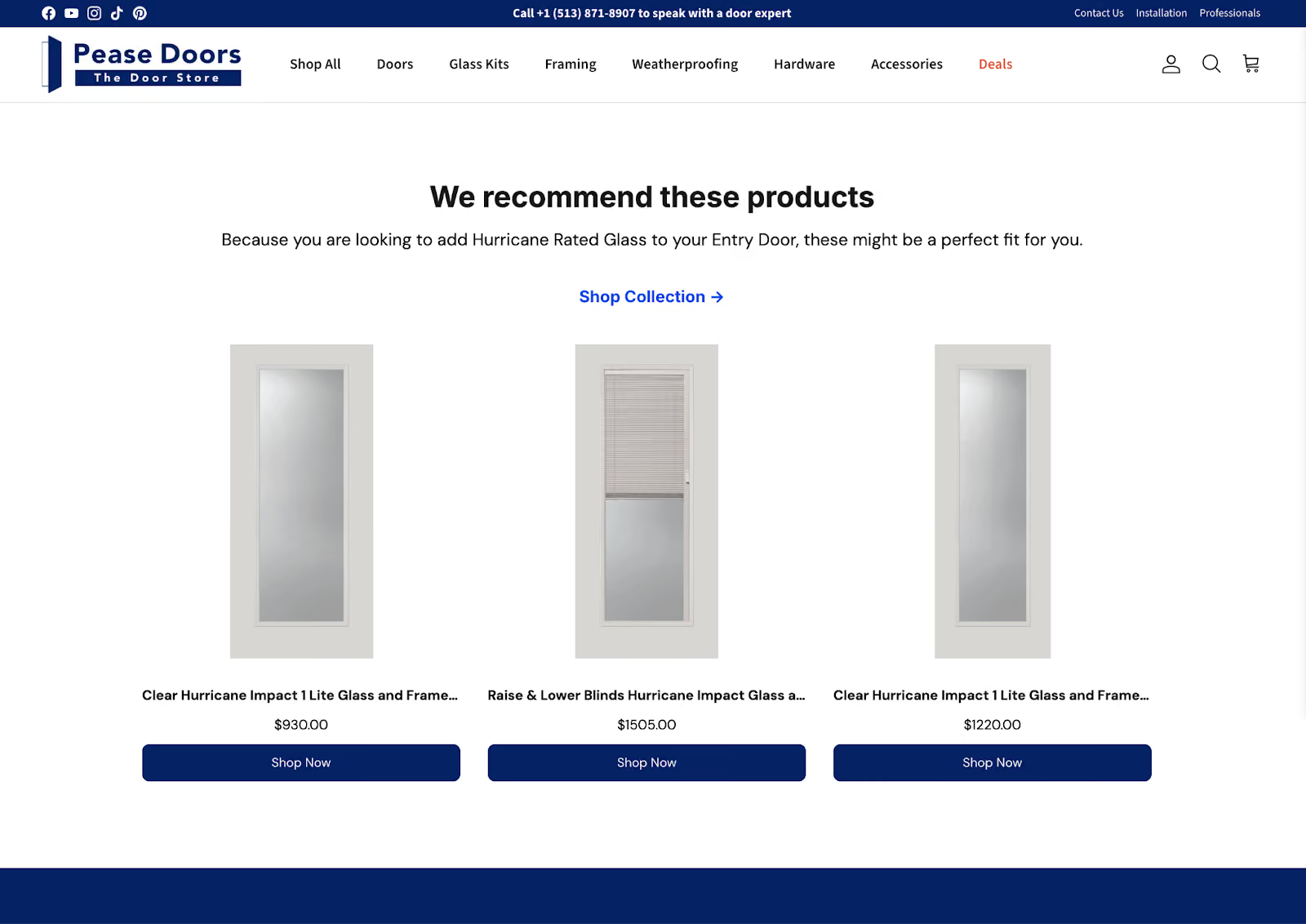
"We also use Klaviyo to retarget quiz takers, which keeps them moving through the funnel. The quizzes converted at 5.27%, over 5x our overall site conversion rate."
The results
From observable funnel performance:
Quiz funnels become a primary path to purchase
- Shoppers actively engage with guided flows
- The quiz is used as a core buying experience, not just a lead tool
- Multiple funnels contribute to overall revenue
Instead of relying only on product pages, Pease creates structured paths that move shoppers toward a decision.
Higher intent flows drive higher-value orders
- Landing page funnels show strong engagement and completion
- Guided experiences match customers with the right configuration
- This leads to higher average order values compared to unguided browsing
By removing open-ended browsing and starting with guided decisions, shoppers move from intent to action faster.
System-wide impact across use cases
Pease’s guided approach extends beyond a single funnel:
- Product selection
- Sizing and fit
- Configuration decisions
Each funnel applies the same principle: Guide the decision, reduce friction, and move the shopper forward.
Why it works
Pease shifts the experience from “Figure it out yourself,” to “We’ll help you choose.” This approach:
- Reduces friction
- Builds confidence
- Increases purchase likelihood
- Drives higher-value orders
Key takeaways
Product pages can’t do all the work, especially when shoppers don’t know what they need. Pease Doors solves this by guiding decisions instead of leaving customers to browse. Their quizzes aren’t just for lead capture; they’re built to move shoppers toward the right product with confidence. And it’s not one funnel doing the heavy lifting. Different entry points match different levels of intent, creating a system that consistently converts more traffic into higher-value orders.
"In the last 90 days alone, ConvertFlow attributed over $135K in revenue with a 38% lift in AOV. It's been one of the highest-impact tools in our stack."