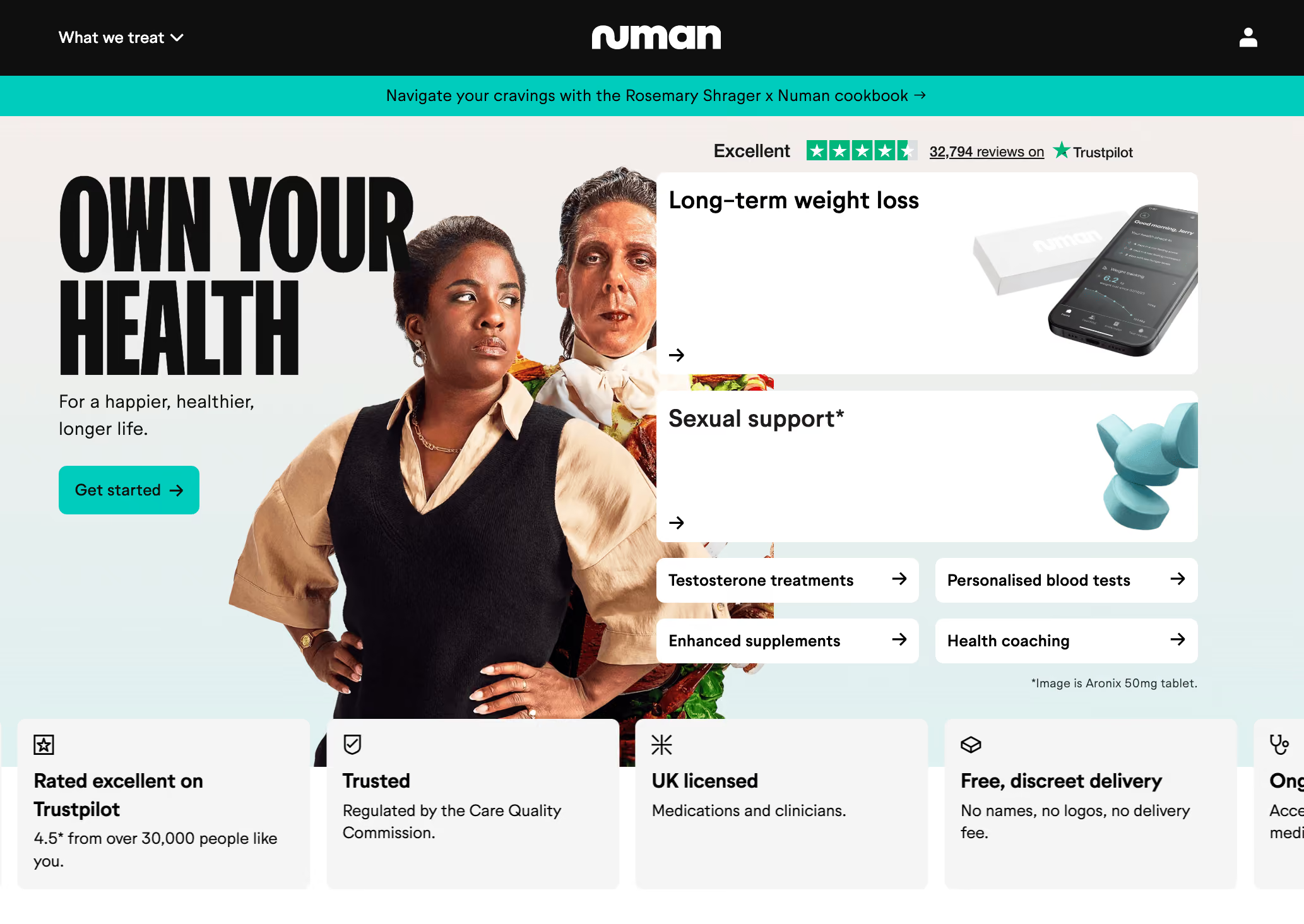
With a strong focus on accessibility, discretion, and long-term outcomes, Numan combines clinical expertise with a modern, direct-to-consumer experience.
As their traffic has grown, so has the complexity of converting it efficiently, especially across varying conditions, sensitivities, and stages of user intent.
The challenge
Numan drives high volumes of traffic across multiple treatment categories, including weight loss, men’s health, and preventative care. But visitors arrive with very different levels of intent.
Some are ready to start treatment. Others are still exploring. Many are sensitive to how offers are presented, especially across different conditions. Sending that traffic straight to pages can create friction:
- The same messaging for every visitor
- No clear way to match intent at entry
- Limited ability to test and improve conversion paths
The solution
Numan uses ConvertFlow popups and overlays to control how users enter their funnel. Instead of sending visitors directly to pages, they trigger different overlays based on context, each designed to:
- Present a specific offer or value proposition
- Capture email and initial intent
- Route users into their next step
Unlike most brands, they don’t rely on a single popup. They run multiple overlays across the site, each tied to a different audience or use case, and test variations within each one.
Using popups to match user intent
Numan uses different overlays depending on what each visitor is likely looking for.
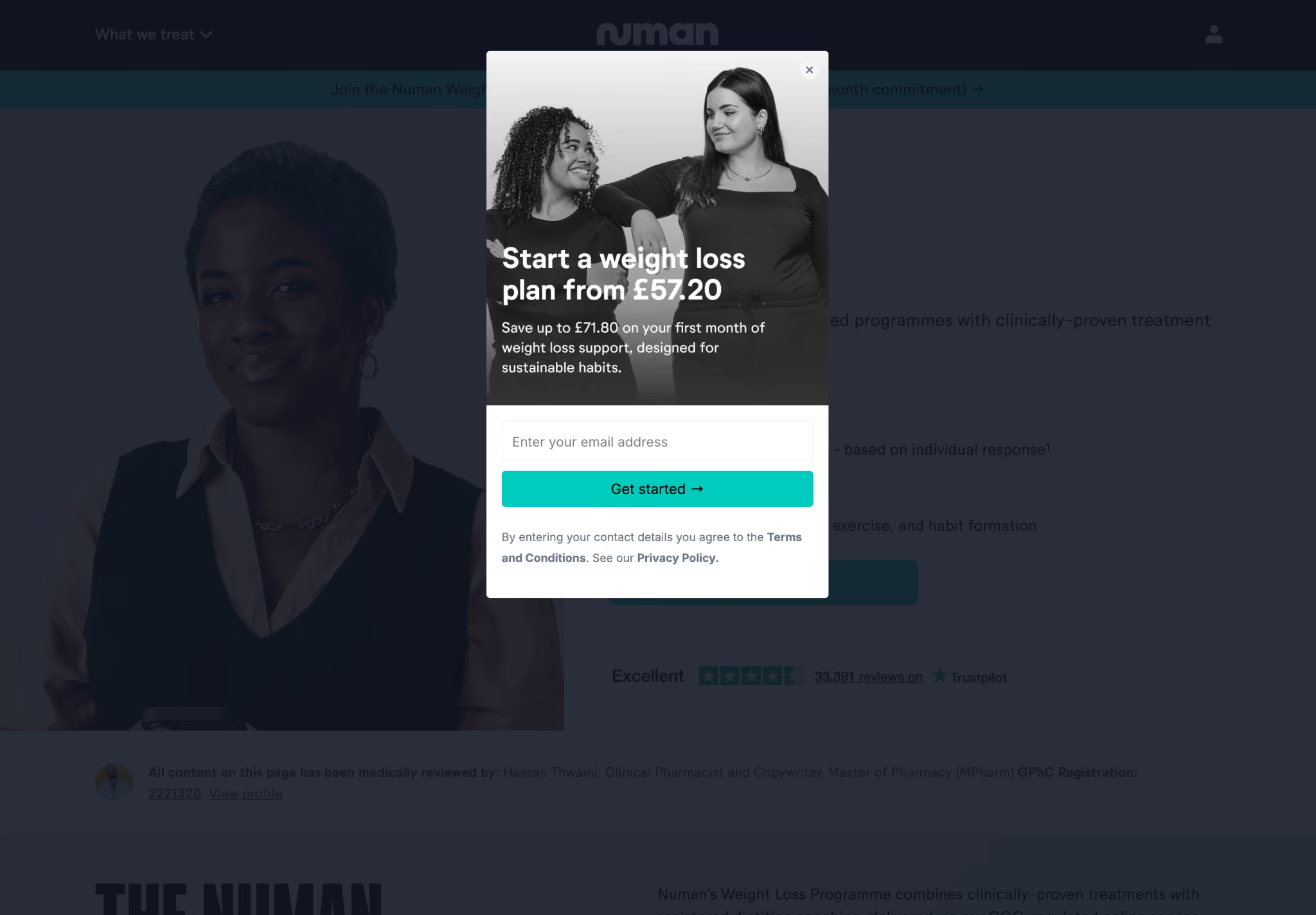
Weight loss offer popup (high intent)
A direct, incentive-driven popup:
- “Start a weight loss plan from £57”
- Simple email capture
- Immediate CTA
This is used to convert visitors who are already considering treatment.
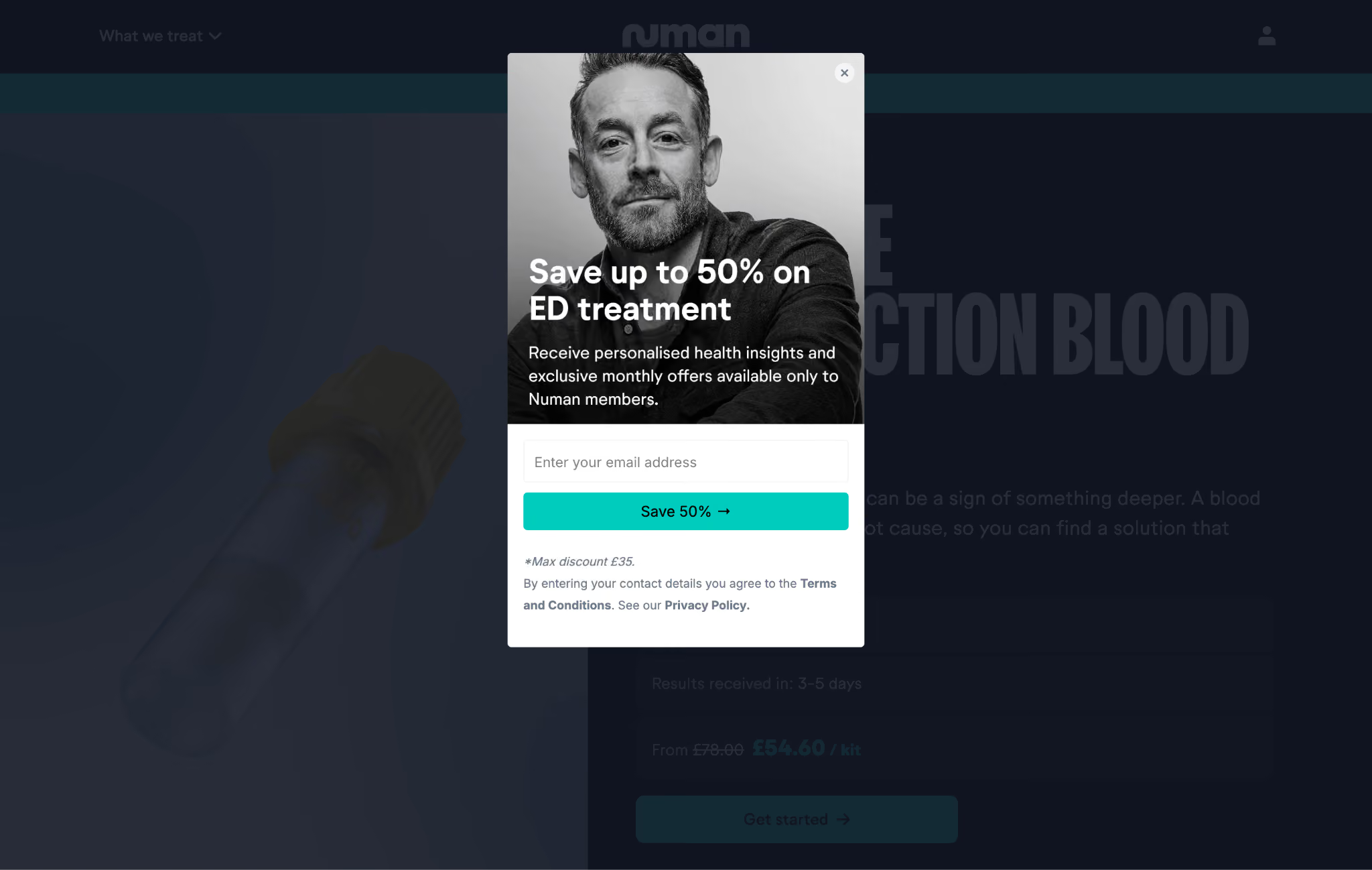
ED treatment popup (high intent, sensitive category)
For ED, the structure stays the same, but the positioning changes:
- “Save up to 50% on ED treatment”
- More emphasis on personalization and discretion
- Same mechanism, different messaging
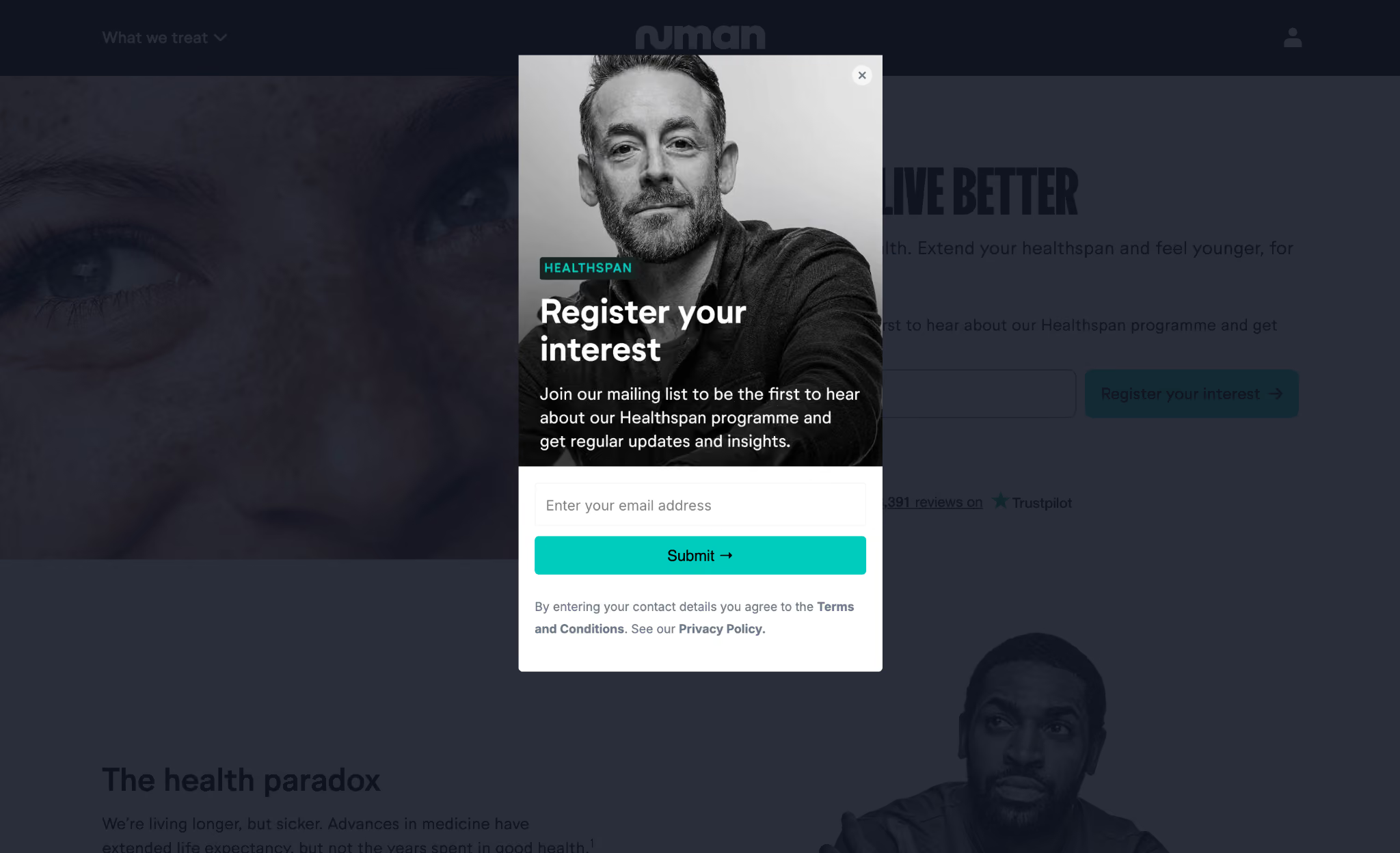
Mailing list popup (low intent)
A softer entry point:
- “Register your interest”
- Focus on updates, insights, and future communication
Used to capture early-stage visitors without forcing a decision.
Running experiments across popup variants
Numan doesn’t treat these popups as fixed assets. Within each campaign, they create and test multiple variants. They continuously experiment with:
- Discount type, fixed vs percentage
- Headline and value framing
- CTA wording
- Offer positioning
Inside a single popup campaign, different variants produce meaningfully different conversion rates. Instead of guessing what works, they:
- Launch multiple variants
- Compare performance
- Shift traffic to the highest performers
This turns each popup into an ongoing test, not a one-time build. In some cases, variant performance differs significantly, reinforcing the impact of messaging and offer structure on conversion outcomes.
The results
These aren’t small tests. Here's what this looks like at scale.
- Some popup campaigns reach hundreds of thousands to over a million visitors
- High-performing overlays generate majority of conversions
- Others capture additional leads across different audience segments
Different popups serve different roles:
- Some are optimized for higher conversion rates
- Others are designed to reach a broader audience
- Others focus on early-stage lead capture
Together, they allow Numan to capture demand across the full range of user intent.
Capturing users across the entire funnel
By using multiple popup types, Numan captures users at different stages:
- Ready to act → direct offer popup
- Considering options → value-driven popup
- Just exploring → email capture popup
Doing this reduces drop-off at the top of the funnel and increases total captured demand.
From popup to next step
Each popup acts as the first step in Numan’s funnel, capturing intent before routing users into the next stage of their journey.
ConvertFlow controls:
- How users enter
- What they see first
- Which message converts them
The takeaway
Numan isn’t relying on a single popup or a single funnel. They’ve built a system where:
- Different popups match different user intents
- Each popup is tested with multiple variants
- High-performing versions are scaled
- New variations are continuously introduced
Instead of sending traffic to static pages, they use ConvertFlow to control and improve the first step of the funnel, where conversion decisions are made. For Numan, popups aren’t just a capture tool. They’re the front door to the funnel, and a testing layer that improves performance over time.