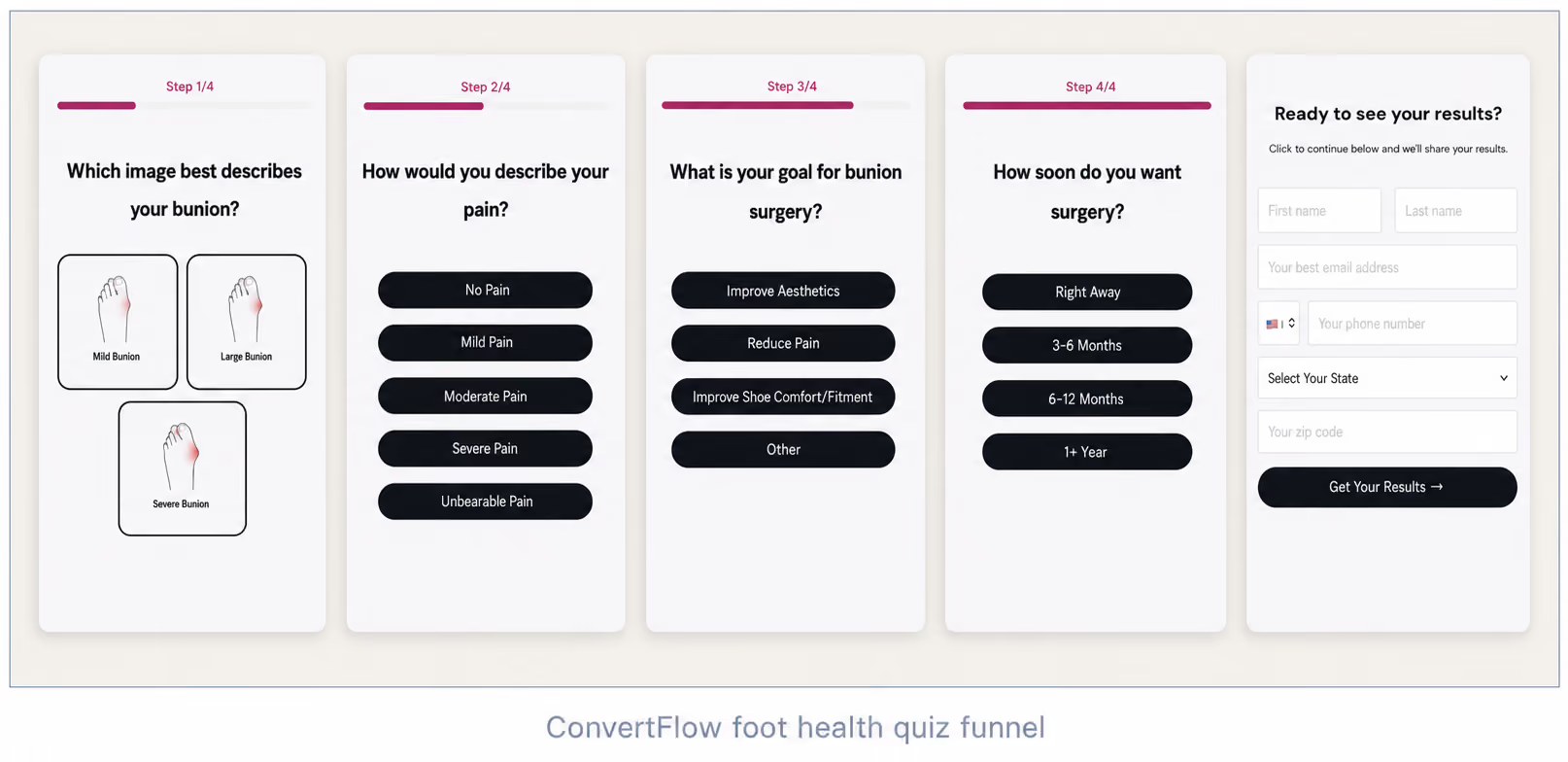
Fusion Orthopedics uses a ConvertFlow quiz funnel to help potential patients understand their foot health and decide what to do next. The funnel asks visitors a short series of foot health questions to qualify them before guiding them to the right next step. The result: more qualified leads and a higher conversion rate.
The challenge
Bunion treatment is a high-consideration decision. Some visitors to Fusion Orthopedics' website, GetBunionSurgery.com, are already actively searching for a surgeon. Many are still trying to answer more fundamental questions:
- How severe is my bunion?
- Is my discomfort serious enough to consider treatment?
- Could surgery help me?
- Am I ready to speak with a doctor?
- What should I do next?
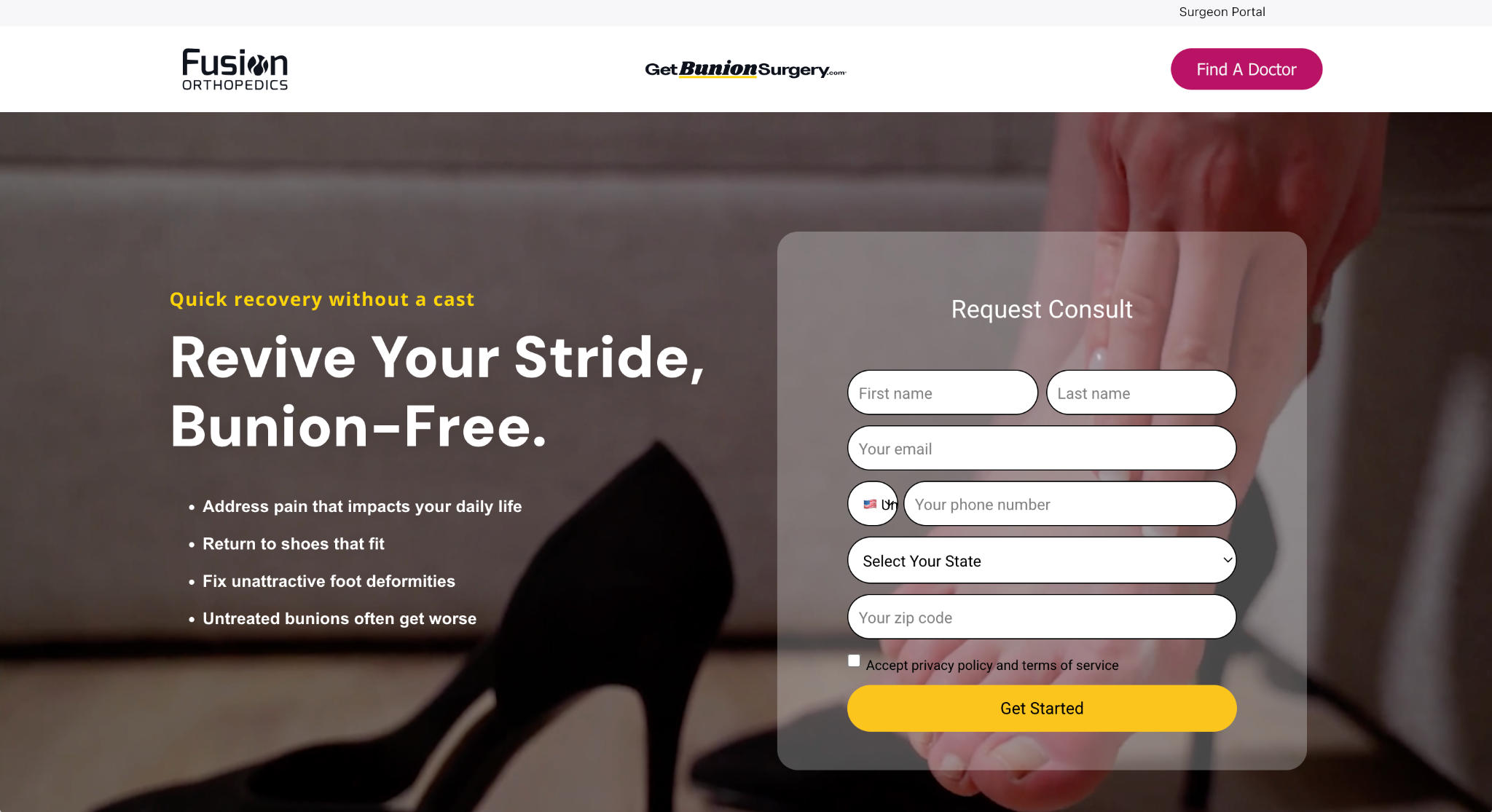
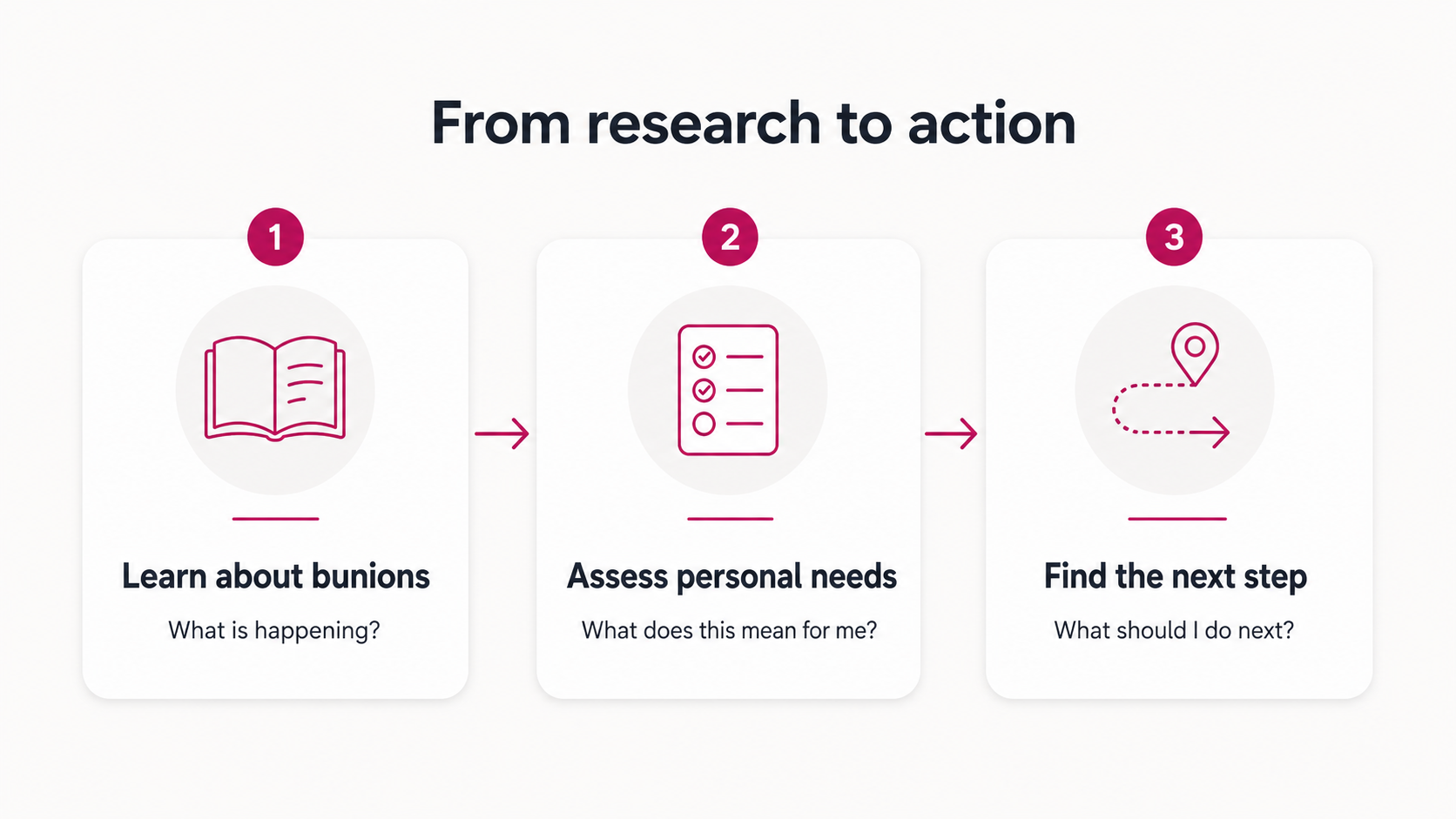
The company's homepage helps visitors explore those questions through educational content, treatment information, before-and-after examples, patient stories, and FAQs. But even a well-designed educational website leaves visitors with one more decision to make on their own: how does this information apply to me?
Traditional website forms such as "Request a Consult" or "Find a Doctor" work well for the few visitors who already know what they want. For most visitors who are earlier in the decision, immediately contacting a surgeon can feel like too big a step.
The solution
Fusion Orthopedics' ConvertFlow quiz funnel is added directly into its homepage, making it part of the visitor's natural journey through the site. By the time visitors reach the quiz, they have already had a chance to learn about bunions, explore treatment options, see patient outcomes, watch a patient video, and review common questions.
The quiz then shifts the experience from general education to guided self-assessment. Instead of leaving visitors to interpret everything on their own, the ConvertFlow funnel asks a short series of accessible questions about their condition, concerns, goals, and readiness for treatment. That consultative approach creates a more approachable conversion path for visitors who want relief but aren't ready to request a consultation yet.
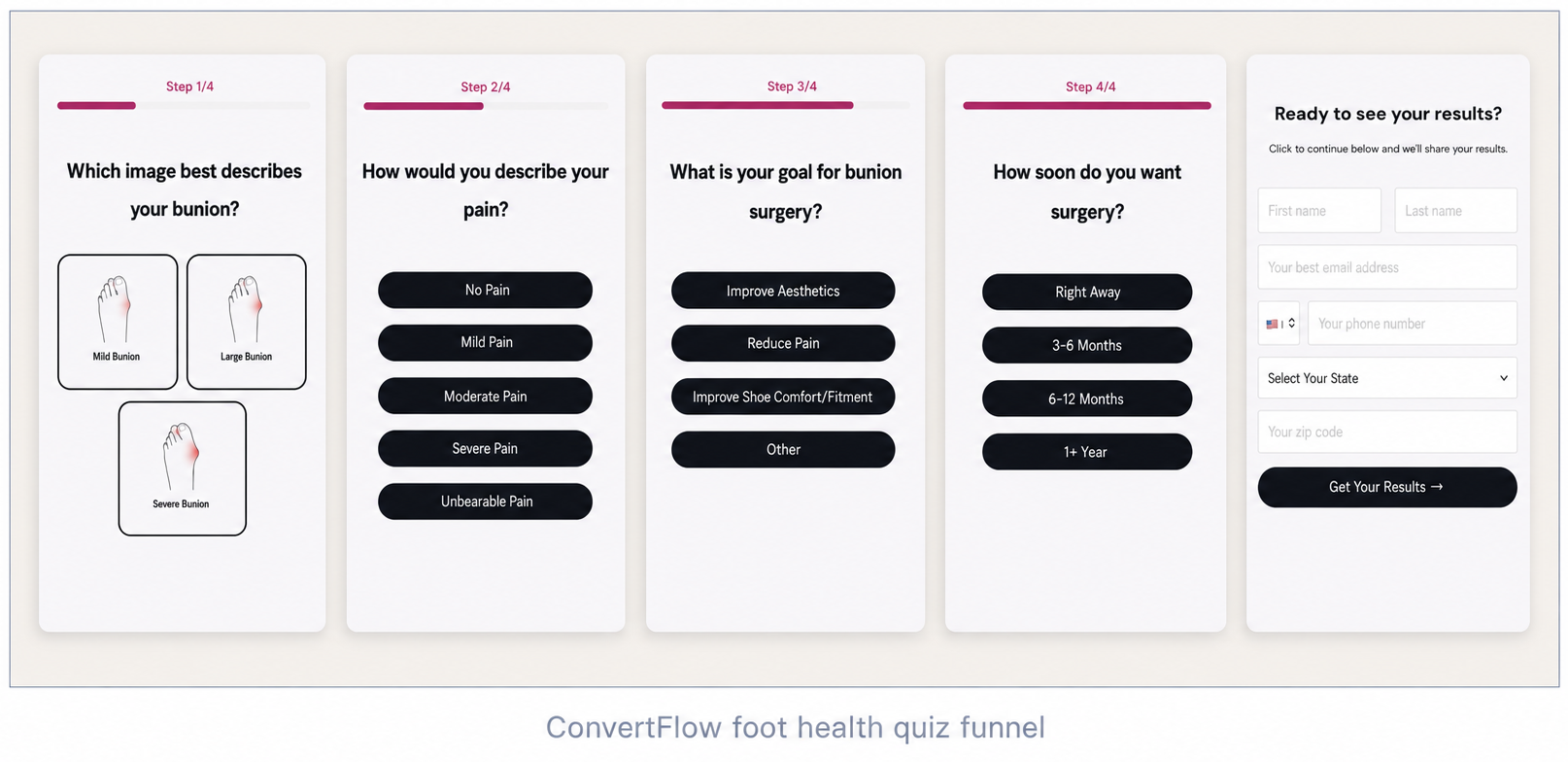
Here is how the funnel works, step by step:
- Help visitors assess their bunion. The funnel opens by asking visitors to select the image that most closely resembles their foot. Visual answers mean nobody needs medical terminology or a clinical classification to participate, which makes the first interaction simple, intuitive, and personal.
- Explain the impact of the condition. Next the quiz asks about the pain or discomfort they experience, moving the assessment beyond appearance and prompting visitors to consider how the bunion affects everyday life.
- Connect the condition to a personal goal. The quiz asks what the visitor hopes to achieve, whether that is reducing discomfort, improving the foot's appearance, or wearing shoes comfortably. People aren't looking for a procedure; they're looking for the outcome it makes possible.
- Gauge readiness for treatment. Visitors indicate when they might consider surgery. That introduces intent and timing without demanding an appointment, so someone actively considering treatment can continue to finding a doctor while a researcher can assess without pressure.
- Provide a clear path forward. At the end, visitors receive a clear next step, including the option to find a doctor. The funnel doesn't try to replace professional medical advice. It helps visitors organize what they know, consider what they want, and move closer to a conversation with a qualified provider.
The results
By embedding the foot health quiz funnel within its homepage, Fusion Orthopedics' visitors start by answering a few questions about their condition instead of immediately requesting a consultation or searching for a surgeon.
Their ConvertFlow quiz funnel generates more leads, qualifies them for sales and helps the prospect make a more educated decision.
Why this funnel works:
- It meets visitors at different stages of readiness. The quiz gives visitors a next step proportional to their current intent, rather than forcing an all-or-nothing choice between browsing and booking.
- It personalizes the educational journey. The questions are simple, but because visitors apply the information to their own situation, the experience feels tailored rather than generic.
- It makes a complex decision feel manageable. A small number of easy questions replaces unfamiliar terminology and open-ended uncertainty.
- It uses patient-friendly language and visuals. What their foot looks like, how much discomfort they feel, what outcome they want, and when they might act are all things a patient can readily answer.
- It connects education with action. Placed inside a homepage that teaches, the funnel converts passive learning into active participation.
- It complements higher-intent CTAs. "Request a Consult" and "Find a Doctor" stay in place for people ready to act, so the homepage serves a wider range of intent instead of depending on a single conversion point.
Key takeaways for health & wellness marketers: give uncertain visitors a lower-commitment alternative to requesting a consultation, ask questions in the language patients use to describe their condition, use visual answers where technical descriptions would stall people, connect symptoms to the outcomes patients care about, introduce treatment readiness gradually, embed assessments inside educational content, keep direct CTAs for high-intent visitors, and end the experience with a clear path toward qualified professional care.
The strongest health & wellness funnels don't pressure visitors into deciding before they're ready. They help people understand their situation, consider their options, and feel more prepared to take the next step.